VIC 2026 proudly introduces our three distinguished keynote speakers. These eminent experts will bring a wealth of knowledge and experience in English Language Education to the Convention, promising to inspire and enlighten our attendees.
Keynote Speaker 1: Associate Professor Obaidul Hamid
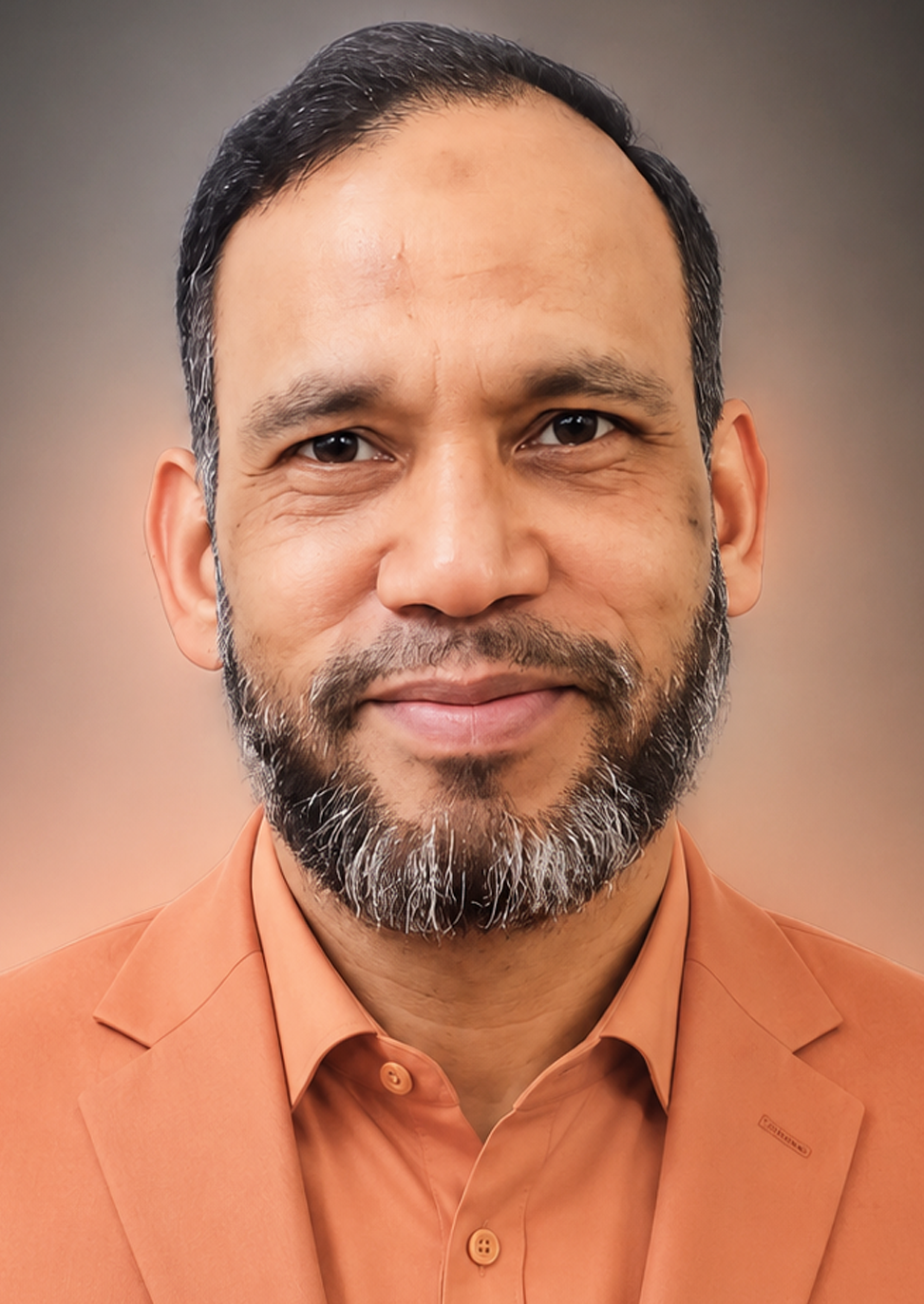 Obaidul Hamid is an associate professor of TESOL Education at the University of Queensland, Australia. His research focuses on the policy and practice of TESOL in developing societies. He is a co-editor of Current Issues in Language Planning and a member of the editorial boards of Language Policy, TESOL Quarterly, World Englishes, Discourse: Studies in the Cultural Politics of Education, English Teaching Practice & Critique and Journal of Asia TEFL. He co-edited Language and Sustainable Development in Bangladesh: Policies, Practices, and Perceptions (Routledge, 2024). He is currently working on a book tentatively titled English as a Southern language contracted with Cambridge University Press.
Presentation: Vietnam’s Ambition for English as a Second Language: Navigating between Idealism and Reality
Vietnam’s aspiration to transform English from a foreign language into a second language reflects a form of classical language planning in a society shaped by market socialism, neoliberal reforms, and postmodern realities. Although leveraging the linguistic capital of English for societal goals carries a utopian appeal, experience from Asia and elsewhere shows that such ambitions are often only partially realized in practice. In some societies, English has been even viewed as a “white elephant” which consumes precious national resources but produces limited outcomes. This presentation will seek a middle ground between idealized goals and pessimistic projections. It is organized into three parts. The first examines the policy through relevant theoretical lenses and outlines its underlying rationale. The second identifies common pitfalls observed in other national contexts and considers how Vietnam might avoid them. The third focuses on policy enactment, highlighting priorities, enabling conditions, and incentives that can support more sustainable results. The presentation will conclude by inviting all stakeholders to claim the policy, be part of its enactment process, and remake English as a Vietnamese public good in line with the national ambition.
Keynote Speaker 2: Professor Barry O'Sullivan
 Professor Barry O’Sullivan OBE has worked on numerous test development and validation projects globally and advises ministries and institutions on assessment policy and practice. He has undertaken research across many areas on language testing and assessment and its history and has worked on the development and refinement of the socio-cognitive model of test development and validation since 2000. He has presented his work at many conferences around the world, while almost 100 of his publications have appeared in a range of international journals, books and technical reports. He is the founding president of the UK Association of Language Testing and Assessment, holds a visiting professorship at the University of Reading, UK, and is Advisory Professor at Shanghai Jiao Tong University, China. He was awarded Fellowship of the Academy of Social Sciences in the UK in 2016 and was elected to Fellowship of the Asian Association for Language Assessment in 2017. In 2019 he was awarded an OBE by the government of the UK for his contribution to language testing.
Presentation: Learning from East Asia: Comparative English Curriculum Trends and Lessons for Vietnam’s ESL Journey
In the context of Vietnam’s national English as a compulsory Second Language Plan (2025–2035, vision 2045), English curriculum reform has become a central priority. It is therefore critical to examine how other countries conceptualise and implement English within their curricula from policy to classroom practice and, crucially, how these reforms are experienced by teachers. This presentation reports key findings from the Curriculum Comparison Project, part of the British Council’s Future of English research programme. The project examines recent reforms in English language curricula at primary and secondary levels in China, Korea, and Japan. The research design for the project is grounded in O’Sullivan’s (2021) Comprehensive Learning System (CLS), which emphasises alignment between curriculum, delivery, and assessment within a shared learning philosophy. The project is structured by these components: curriculum (Part 1), delivery (Part 2), and assessment (Part 3), with an added focus on monitoring, evaluation and learning (Part 4). The presentation focuses on findings from Part 1 and, in particular, Part 2. Part 1 maps reform trends using national curriculum guides and expert input, highlighting common priorities and context-specific differences. Part 2 investigates how reforms are interpreted and enacted by teachers through a mixed-methods approach, including a survey of 639 teachers, 14 focus groups, and 31 classroom observations. The findings shed light on teachers’ preparedness, understanding, and implementation practices across China, Korea and Japan. The session concludes by considering implications for Viet Nam, with particular attention to how teachers from China, Korea and Japan experience and respond to curriculum reform, and potential lessons learnt. Situating the findings within broader global trends in English language education, the presentation offers insights for curriculum reform and development.
Keynote Speaker 3: Assoc. Prof. Dr. Vo Thi Kim Anh
 Associate Professor Dr. Vo Thi Kim Anh works at University of Foreign Language Studies, The University of Danang, Vietnam. She has extensive experience in teaching and research in the areas of educational evaluation, TESOL, language testing and assessment, and teacher education. Her research interests include language education, teacher professional development, curriculum evaluation, and assessment practices in language learning and teaching. Dr. Vo has published numerous articles in reputable national and international journals and has contributed actively to research and academic development in these fields. She is currently leading research on academic integrity in the era of artificial intelligence, focusing on redefining plagiarism and promoting ethical practices in AI-assisted learning, teaching, and academic work.
Presentation: Preparing Stakeholders for the Transition towards an ESL-Oriented Education System in Vietnam
The transition towards an ESL-oriented education system should be viewed not merely as a reform of language education, but as a systemic transformation of the wider education system. Its success depends heavily on the coordinated readiness of key stakeholders, including government agencies, educational institutions, school leaders, teachers across disciplines, students, parents, and industry partners. Preparing these stakeholders is, therefore, essential for navigating the complex and long-term transition from English as a Foreign Language (EFL) towards a more English as a Second Language (ESL)-oriented model. At the policy level, the government and educational leaders need to establish clear policies, implementation guidelines, and institutional support mechanisms. Teachers must be equipped with sufficient English proficiency, appropriate pedagogical knowledge, and the ability to integrate English into disciplinary teaching. Students, meanwhile, need opportunities to develop learner autonomy, communicative confidence, digital literacy, and other competencies required to use English effectively in academic, professional, and social contexts. Parents should also be provided with adequate information to strengthen their awareness and realistic expectations of ESL-oriented education. Finally, employers and industry partners can contribute by communicating their actual language needs, collaborating with educational institutions, and creating English-rich environments within their organizations. A whole-system approach is, therefore, essential for translating policy aspirations into sustainable educational practice.